

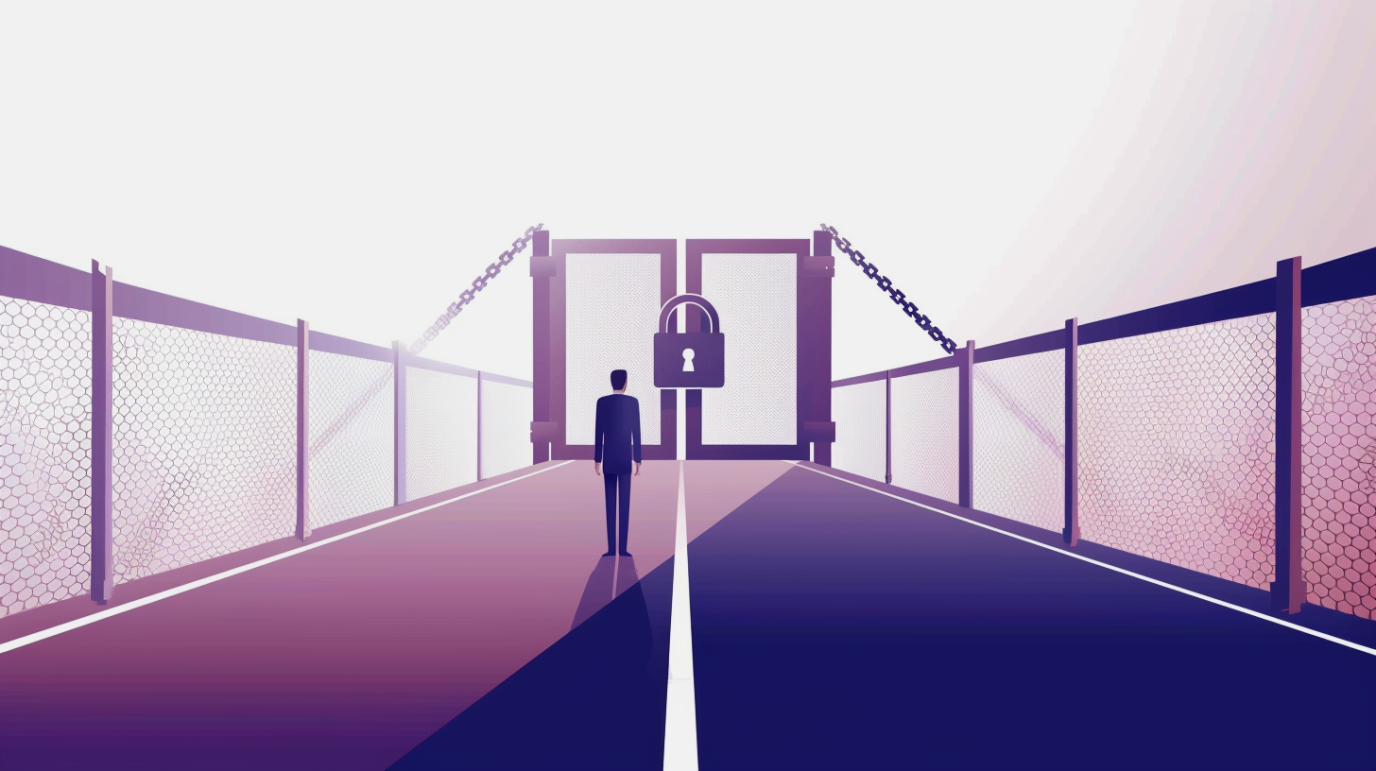
Cybersecurity rarely shows up as a line item on a behavioral health treatment plan, but it has just as much impact on outcomes.
When login screens, password resets, and compliance alerts begin to feel like hurdles instead of protections, your team feels it. That friction adds up. What starts as a few missed prompts can grow into a pattern of fatigue-driven missteps. And in a sector built on trust, those missteps carry real consequences.
Cyber fatigue creates the conditions for risk. And that makes it a patient safety issue, not just an IT concern.
Security fatigue hides in plain sight
Every team has seen it. A therapist juggles sessions and documentation across systems, only to hit a multi-factor prompt that slows them down. A care coordinator tries to reset a forgotten password between appointments. A training video auto-plays while a clinician manages a crisis in the hallway.
These are not unusual moments. They’re normal ones, and that’s what makes them dangerous.
Research shows that overexposure to security measures, especially when they’re divorced from daily workflows, drives cognitive strain and burnout. The more exhausted staff feel, the more likely they are to click through alerts, choose convenience over caution, or tune out training altogether (Burrell, 2024).
The consequence isn’t just a potential breach. It’s a breakdown in culture and a slow erosion of confidence that security helps rather than hinders.
The real problem: Security feels like an interruption
Traditional security programs often start from a place of mistrust. They rely on repetition, restriction, and reaction. And while these tactics may satisfy auditors, they rarely inspire the people tasked with following them.
Healthcare security guidelines stress the importance of tailoring approaches to each setting. One-size-fits-all doesn’t work in behavioral health, where staff rotate roles, patients require confidentiality safeguards, and IT capacity stays lean (CISA). The U.S. Department of Health & Human Services highlights the sector’s unique vulnerabilities, especially its dependence on interconnected systems and sensitive data (HHS ASPR, 2023).
When policies ignore operational context, fatigue follows fast. And so do shortcuts.
Rethinking security as care
Behavioral health professionals excel at meeting people where they are. Security should follow the same principle.
Instead of starting with control, start with compassion. Security, done right, protects staff as much as patients. It’s an act of care. Reframing security this way changes the tone and the tactics, from enforcement to enablement.
That’s where Zero Trust Architecture can help. It focuses on constant verification, not blind trust, which allows organizations to embed protection into every action rather than stack it onto already strained workflows (NIST, 2020). The result is a quieter, more integrated security posture.
Ask the right questions: Where do staff face friction? What triggers workarounds? How does the system support good habits instead of policing bad ones?
A password policy that fights muscle memory will never win. A training module with no clinical context won’t stick. And a login protocol that adds time without adding clarity risks eroding trust before anyone even clocks in.
Quiet security, strong culture
The best security culture hums in the background. Think smart defaults, not daily disruptions.
This means embedding protective controls in workflows, dashboards, and automation layers. It means tracking fatigue signals and adjusting before people disengage. And it means building systems that support secure behavior rather than demand it.
Security fatigue models show that user disengagement stems not from lack of information, but from too much irrelevant information delivered the wrong way (Reeves, 2021). The solution is smarter design, not louder messaging.
At Xpio Health, we guide behavioral health leaders toward operationally aligned security. We help rework MFA flows so they match clinic schedules. We optimize EHR logins for frontline efficiency. We embed alerts into the tools teams already use, not tacked onto systems they don’t.
This kind of “quiet security” doesn’t rely on staff heroics. It reduces the load. And it lasts.
Leadership sets the tone
Cybersecurity succeeds when leaders treat it as a people issue.
Normalize secure habits without drama. Create space to talk about friction. Recognize the emotional weight of constant vigilance. Celebrate small wins like a successful phishing simulation, or someone reporting a suspicious login attempt. These gestures build culture faster than any audit ever will.
The Identity Management Institute calls out the psychological weight of security practices, noting that people need more than rules. They need reason, relevance, and respect (Identity Management Institute).
Good cybersecurity is steady. It starts at the top. And it shows up in how you protect the people doing the protecting.
In behavioral health, the stakes always include safety, trust, and compassion. And that means your cybersecurity strategy should feel grounded, respectful, and quietly effective.
How is your organization managing the emotional and cognitive weight of cybersecurity? Let’s talk about how to ease the burden and still strengthen your defenses.
#BehavioralHealth #CyberFatigue #PeopleFirst #XpioHealth #Cybersecurity #EHRSecurity #BurnoutPrevention #HealthcareLeadership
References
- Burrell, D. N. Understanding Cognitive and Behavioral Psychological Factors that Lead to Cybersecurity Breaches in Healthcare. RAIS Journal for Social Sciences. 2024. https://ideas.repec.org/a/smo/jornl1/v8y2024i2p43-53.html
- Cybersecurity and Infrastructure Security Agency (CISA). Healthcare and Public Health Cybersecurity. https://www.cisa.gov/topics/cybersecurity-best-practices/healthcare
- U.S. Department of Health & Human Services (HHS), ASPR. Healthcare Sector Cybersecurity. 2023. https://aspr.hhs.gov/cyber/Documents/Health-Care-Sector-Cybersecurity-Dec2023-508.pdf
- National Institute of Standards and Technology (NIST). NIST Special Publication 800-207: Zero Trust Architecture. 2020. https://www.nist.gov/publications/zero-trust-architecture
- Reeves, C. The Four-Component Model of Cyber Security Fatigue. ResearchGate. 2021. https://www.researchgate.net/figure/The-four-component-model-of-cyber-security-fatigue_fig1_349987854
- Identity Management Institute. Psychology of Cybersecurity and Human Behavior. https://identitymanagementinstitute.org/psychology-of-cybersecurity-and-human-behavior/